CANOPY 5200APG
Access Point 5.2 GHz · 10 Mbps · 60° sector
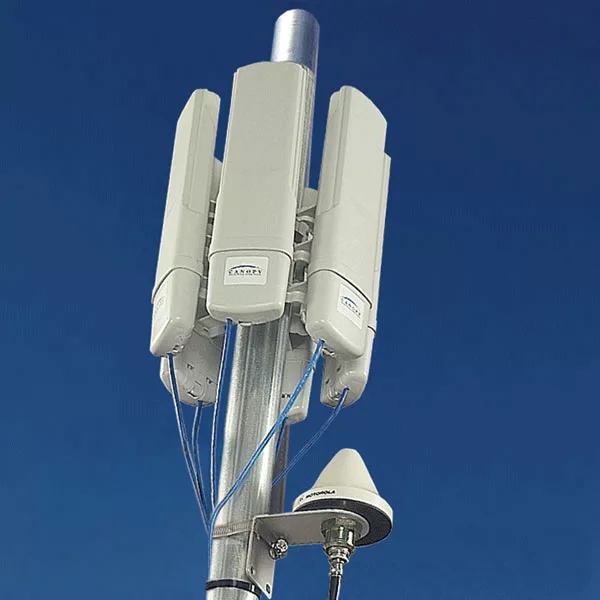
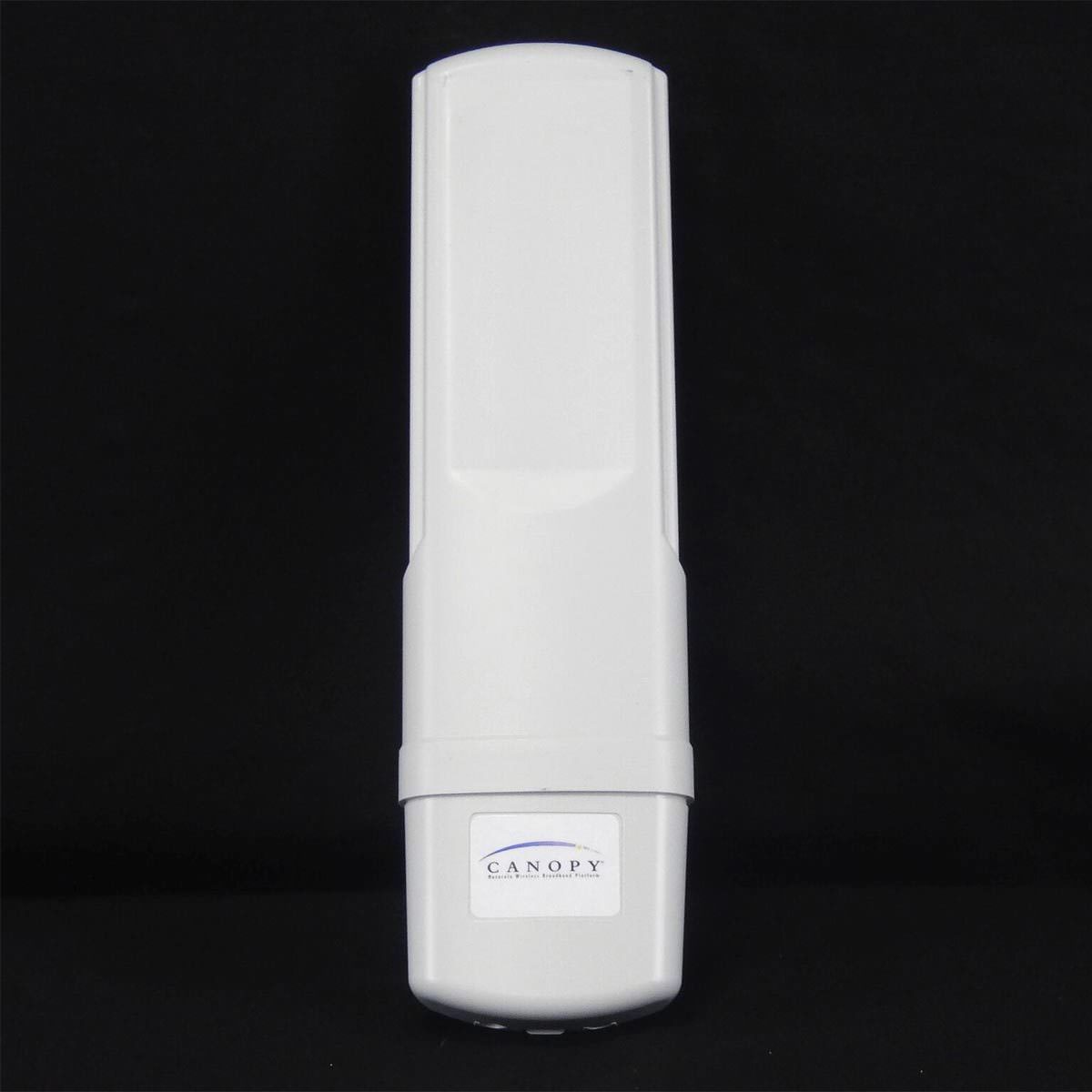
84 000₽/ unit1 pc.
- 5 250–5 350 MHz (U-NII-2)
- TDD · GPS sync
- Up to 200 SM · NEMA 4
- Laptop web configuration
Equipment for radio networks, satellite links and local computing.
Motorola Canopy
Subscriber module for a Canopy network. See the model page for scope and configuration.
Explore equipment ↗Availability and configuration confirmed in a quotation
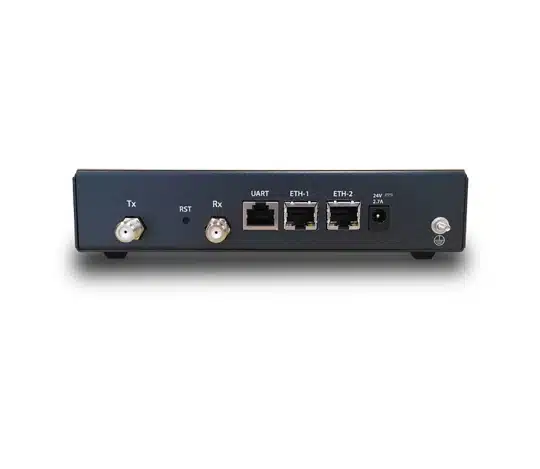
ST Engineering iDirect
Satellite modem within a VSAT kit. Equipment, connections and scope of supply.
Explore equipment ↗Availability and configuration confirmed in a quotation
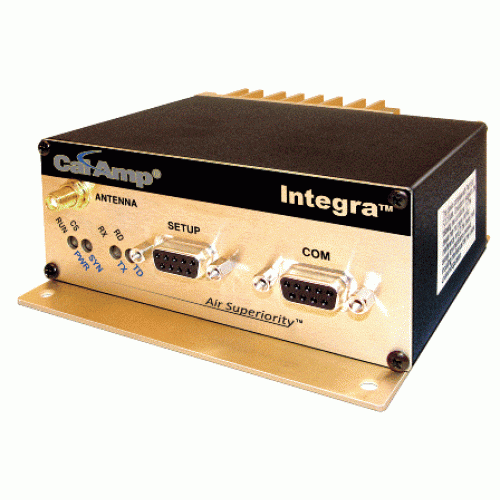
CalAmp
Data radio modem. Configuration selected for the frequency and interfaces of your system.
Explore equipment ↗Availability and configuration confirmed in a quotation
Server projects
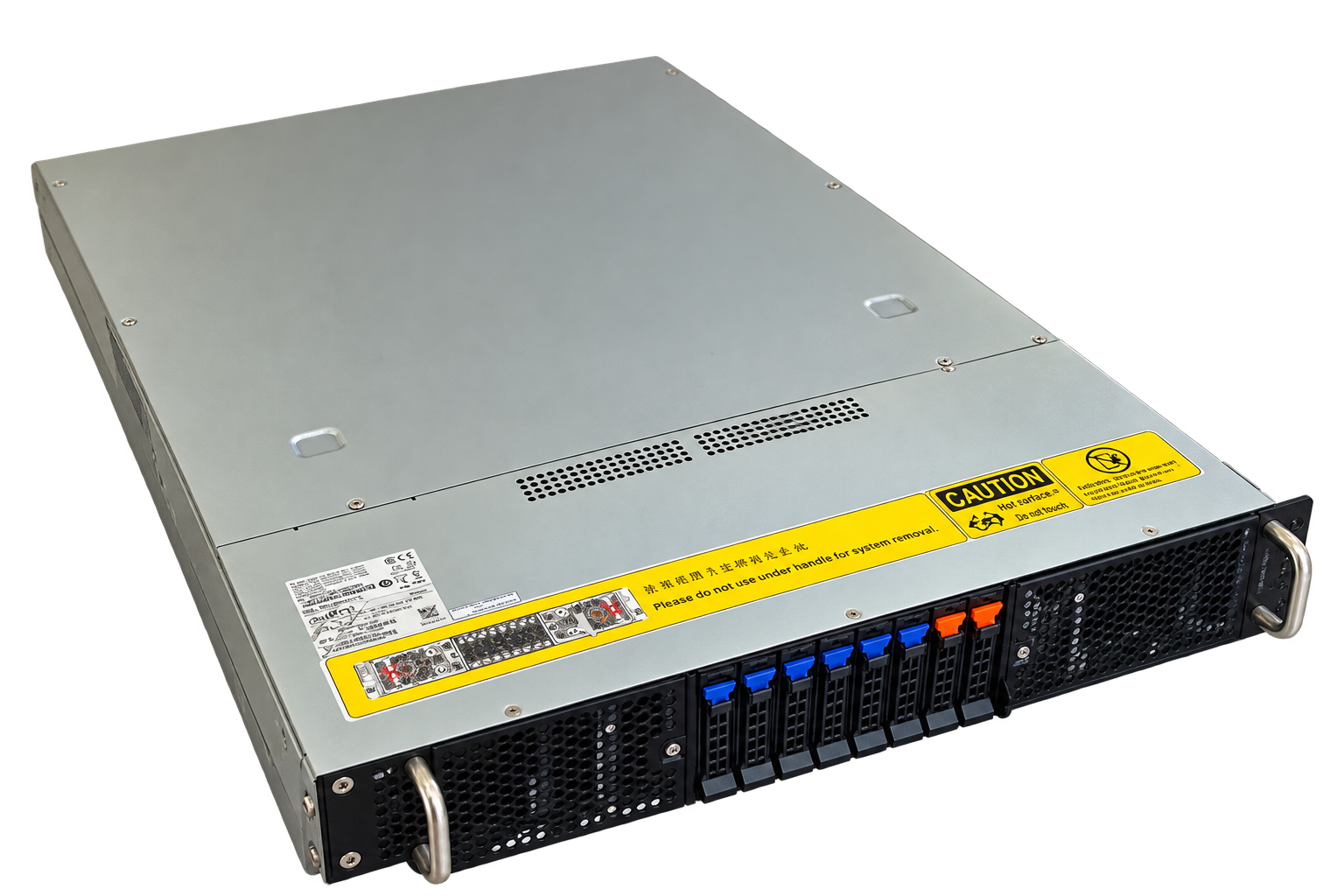
Local AI for company workflows. Server platform and services according to an agreed specification.
Explore equipment ↗Availability and configuration confirmed in a quotation
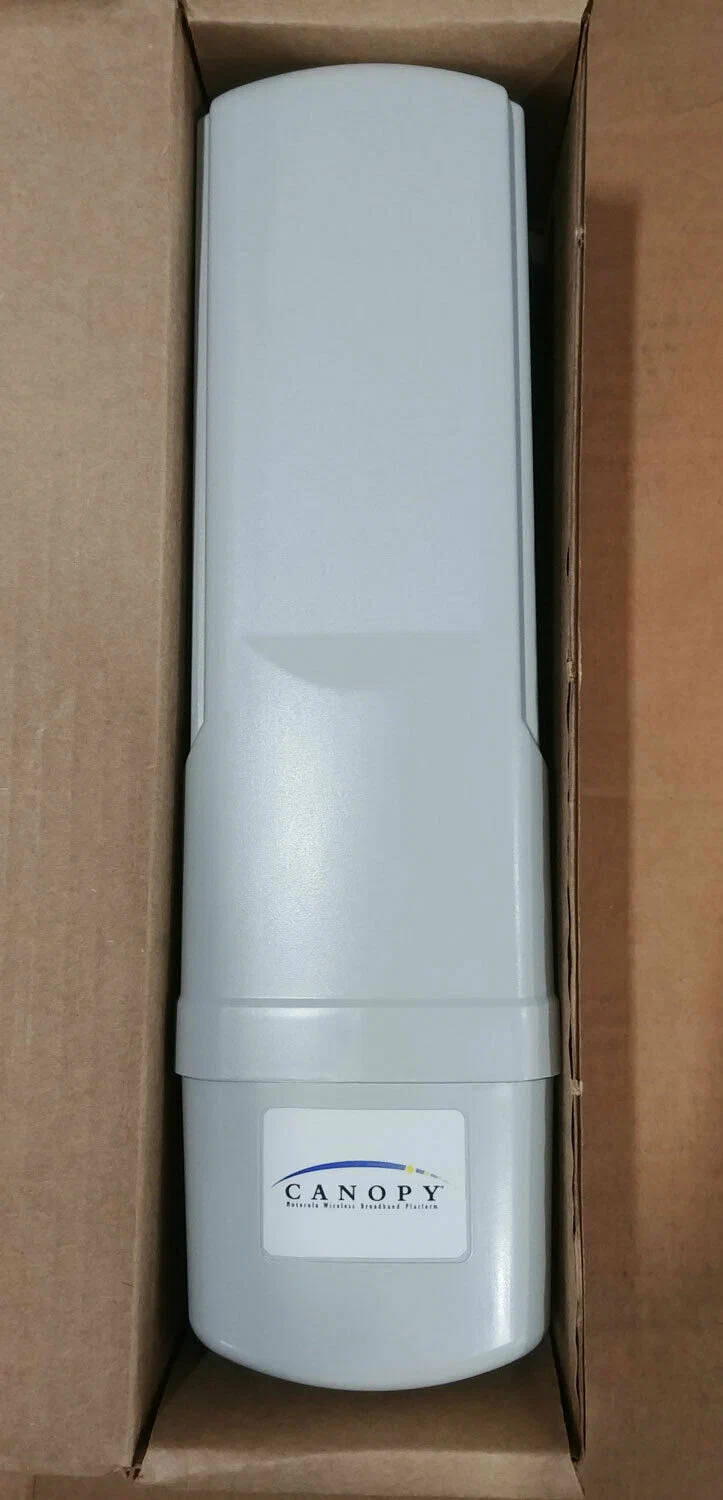
5200APG access point + 8 × 5250SMBC Canopy Advantage subscriber modules + 9 × ACPSSW-09B power supplies. Plus modern Ubiquiti NanoStation M2 and NanoStation 5. In stock, configurable from any laptop.
Omega Canopy is an Omega Solutions group project. We stock the last remaining Motorola Canopy 5.2 GHz kit: one AP + 8 SMs — a ready-to-go wireless network for remote sites, farms, summer communities, industrial zones. Plus several Ubiquiti NanoStation units for modern 2.4 GHz needs.
Access Point 5.2 GHz · 10 Mbps · 60° sector
Canopy Advantage · 5.2 GHz subscriber · up to 25 km with reflector
24V PoE injector — one per module
Motorola Canopy is not Wi-Fi. It's a professional PtMP system with a proprietary protocol built at Motorola Labs specifically for fixed-wireless operators (WISPs). The goal: stable link where plain Wi-Fi would have died ages ago.
All APs of the same network operate on a single GPS signal. Transmission and reception are separated in time - no point interferes with the neighboring one. On one mast you can put 6 AP 360° without internal interference.
Canopy does not use 802.11. Its signal is not Wi-Fi, it is not visible to ordinary scanners, it has its own MAC format. Immunity is sharply higher, and associated Wi-Fi noise is almost not affected.
The AP operates in the 60° sector, and the receiver only sees what is right in front of it. This radically improves noise resistance and allows multiple APs to be placed on a single mast.
Canopy was designed as carrier-grade WISP equipment. Up to 200 SMs can be attached to one AP (realistically 60–100). Our 8-SM kit is a light "small operator" setup.
Without a reflector, the SM reaches up to 3.2 km. With the Canopy Passive Reflector Dish (the familiar white dish), the range grows to 25 km in line of sight. The reflector is passive, without electronics.
Cast plastic case, protection from rain and snow, working range -40 ... + 55 ° C. Canopy was sold for towers in Siberia, Alaska, northern Canada. In the sun, in the cold, in the oblique rain - still works.
5250SMBC belongs to the Canopy Advantage family. Confirm compatibility, licences, throughput and firmware for the specific AP/SM pair. The BC suffix does not identify a separate modulation mode.
No special software is needed. Connected SM to the PoE-injector ACPSSW-09B, the second patch cord in the laptop, in the browser - address 169.254.1.1, root login without password. Then frequency, SSID radio networks, encryption - all through the web-interface.
At the air-interface level, Canopy supports DES (standard) and AES (option) encryption. For farms and SNT, that's more than enough. For industrial sites - turn on AES and sleep quietly.
The central node of the Canopy PtMP network is in the 5.2 GHz (U-NII-2) band. One access point is a sector of 60°, when installing 6 AP on the mast covers 360°. One copy remained in stock - for the ready-made network 5200APG + 5250SMBC.
MPN 5200APG · 5.250–5.350 GHz (U-NII-2) · TDD · NEMA 4
The Motorola Canopy 5200APG is the central node of the proprietary PtMP network. Operates in the range of 5.250–5.350 GHz (U-NII-2) with time-sharing (TDD) and GPS-synchronization. 60-degree sector allows you to put 6 AP on one mast and cover 360° without internal interference between them. Serves up to 200 subscriber modules, 10 Mbps radio signalling rate; useful throughput depends on configuration. Configured via the web-interface from a regular laptop via Ethernet. power supply 24V via PoE-injector ACPSSW-09 V (included).
Subscriber module with Canopy Advantage - "developed logic." 8 pieces in stock. This is exactly what you need for an 8-client network under a single 5200APG point. Each has its own ACPSSW-09B.
MPN 5250SMBC · 5.250–5.350 GHz · Canopy Advantage · NEMA 4
The Motorola Canopy Advantage 5250SMBC subscriber module It works in tandem with the 5200APG access point on the range of 5.250-5.350 GHz. Radio-link features depend on the AP/SM combination, licences and firmware. Compatible with the latest official firmware Canopy R8. Line of sight range up to 3.2 km without a reflector and up to 25 km with Canopy Passive Reflector Dish. Encryption of DES (standard) and AES (option). There's 8 in storage.
MPN ACPSSW-09B · 9 units available · one for each module
The original power supply unit Motorola Canopy is a small gray adapter with two RJ-45 connectors: one goes to the radio (combined Ethernet + power supply 24 V), the second goes to the switch / laptop (data only). Without this block, Canopy does not work - it is through it that power supply is supplied on twisted pair to the mast. Our warehouse includes one unit for each module: 9 units (1 for AP + 8 for SM).
One access point 5200APG on the central mast serves eight subscriber modules 5250SMBC - each in their own client facility. Every module needs its own. PoE-injector ACPSSW-09B. Below is the network diagram and step-by-step installation.
The mast is 10-20 meters in the center of the site. 5200APG is attached in the upper section, the GPS antenna is displayed separately. power supply 24V twisted pair from ACPSSW-09 V inside the cabinet of automation.
Connect the AP to the PoE injector, the second port to the laptop. In browser 169.254.1.1, root without password. Set the frequency, Sync Input = GPS, enable DES/AES encryption, set the IP address.
Each 5250SMBC is placed at a client facility, sent to the mast. The range without a dish is up to 3.2 km, with Canopy Reflector Dish - up to 25 km. Direct optical visibility is important.
SM scans the air, finds the AP by SSID and sync, requests registration. AP assigns an IP from its pool, QoS (Max/Sustained/Burst) kicks in. The network is up.
Reference section based on the Motorola Canopy R8 User Guide and WISP Brochure. Check parameters and recommendations against the actual equipment version.
| // CANOPY 5200APG — Access Point 5,2 GHz | |
|---|---|
| Product name | Motorola Canopy 5200APG Access Point |
| Manufacturer | Motorola Canopy (later Cambium Networks PMP100) |
| MPN | 5200APG |
| Frequency range | 5 250–5 350 MHz (U-NII-2) |
| Channel bandwidth | 20 MHz |
| Modulation | FSK; mode depends on the radio version and AP/SM pair |
| Duplex | TDD (Time Division Duplex) with GPS sync |
| Sectorization | 60° azimuth, 60° elevation |
| Throughput | 10 Mbit/s radio signalling rate on AP |
| SMs per AP | Up to 200 (practical 60–100) |
| Output power | 23 dBm (max., adjustable) |
| Receiver sensitivity | −86 dBm (BER 10⁻⁴) |
| Ethernet interface | 10/100 Mbps, RJ-45 (via PoE) |
| Power supply | 24 V DC via ACPSSW-09 V (complete) |
| Consumption | ≈ 0.3 A (7 W) |
| Operating temperature | −40 … +55 °C |
| Enclosure | NEMA 4 (≈ IP66) |
| Radio protocol | Proprietary Canopy (non-802.11) |
| Encryption | DES (standard) / AES 128 (optional) |
| Sync | GPS (via CMM or UGPS module) |
| Firmware | Canopy R8 (latest official Motorola) |
| Setup | Web UI from laptop (169.254.1.1) |
| Price | 84 000 ₽ · 1 pc. This is not a public offer. Please confirm price, availability and lead time by email. |
| // CANOPY 5250SMBC — Subscriber Module Canopy Advantage | |
|---|---|
| Product name | Motorola Canopy 5250SMBC Subscriber Module Canopy Advantage |
| Manufacturer | Motorola Canopy / Cambium Networks |
| MPN | 5250SMBC |
| Frequency range | 5 250–5 350 MHz |
| Version | Canopy Advantage (extended chipset) |
| Modulation | 2-level FSK |
| Range without reflector | up to 3.2 km (direct visibility) |
| Range with reflector | Up to 25 km (Canopy Passive Reflector Dish) |
| Antenna integrated | ≈ 7 dBi |
| Antenna + reflector | ≈ 25 dBi effectively |
| Output power | 23 dBm (max.) |
| Receiver sensitivity | −86 dBm |
| Throughput | Share of 10 Mbps AP (QoS) |
| Ethernet | 10/100 Mbps RJ-45 (via PoE) |
| Power supply | 24 V DC via ACPSSW-09 V (complete) |
| Consumption | ≈ 0.3 A |
| Operating temperature | −40 … +55 °C |
| Enclosure | NEMA 4 (IP66) |
| Encryption | DES / AES 128 |
| QoS | Max / Sustained / Burst, prioritization |
| Firmware | Canopy R8-compatible |
| Setup | Web UI from laptop |
| Amount available | 8 pcs. |
| Price | 28 000 ₽ / unit This is not a public offer. Please confirm price, availability and lead time by email. |
| // ACPSSW-09B — PoE Power Supply Canopy | |
|---|---|
| Product name | Motorola Canopy Power Supply ACPSSW-09B |
| MPN | ACPSSW-09B |
| Type | 24 V PoE injector (non-standard 802.3af/at) |
| Input voltage | 100–240V AC, 50/60 Hz |
| Output | 24 V DC, via combined RJ-45 |
| Current | 0.3–0.5 A (depending on radio) |
| Connectors | RJ-45 "DATA" (in laptop/switch) · RJ-45 "DATA+24V" (on radio) |
| Mounting | Desk / wall / inside an automation cabinet |
| Compatibility | All Motorola Canopy AP & SM (100-series) |
| Quantity | 9 pcs. · one for each module |
| Price | 6 100 ₽ / unit This is not a public offer. Please confirm price, availability and lead time by email. |
Motorola Canopy is designed for WISP operators and industrial sites. Today, such equipment is widely used in Russian villages, farms, garden associations and remote industries – where fiber is impossible or expensive, and mobile communication is unstable.
One AP on the association's mast serves 8–60 homes. A replacement for carrier 4G which is absent in the forest. Cheap, stable, no tariff.
The link between the barn, the hangar, the workshop, the operator's house. Video surveillance, SCADA-control of waterings, grain accounting. Canopy doesn't fall in the rain.
Quarries, elevators, logging, gas stations on the highway. Transfer of dispatch and control to the central point. AES encryption is for critical data.
Start of a small wireless operator in a village of 50–200 subscribers. Canopy was the original carrier-grade WISP standard before mass Wi-Fi.
Wireless cameras around the perimeter of the protected object, the communication line between the passage and control room. Encryption and 60° sector – protection against external scans.
Data transfer from autonomous weather stations to the central hub. One SM with a plate reflector and a 25-kilometer shoulder work stably without SIM cards and subscription fee.
Shops and kiosks outside wired internet coverage. Canopy reliably handles POS terminals with no packet loss in bad weather.
Backhaul links for small base stations of mobile operators. Canopy with a dish gives 25 km of direct channel - without rental optics and without a 3G/4G approach.
If Canopy is a 5.2 GHz classic for stability, NanoStation is a modern 2.4 GHz Ubiquiti airMAX line with 150+ Mbps bandwidth. There are a few “old men” (NanoStation 5) and a pair of NanoStation M2 – suitable as a PtP bridge or PtMP sector for an individual client.
// 2.4 GHz · 150+ Mbps · airOS
Universal airMAX point: can work as Access Point, Bridge, Station. Integrated 11 dBi dual-pol antenna, 26 dBm power Real range PtP 10+ km at line of sight. power supply PoE 24V (included). Configured through airOS - web interface.
// 5 GHz · Classic airOS
The classic first-generation 5GHz NanoStation is an inexpensive and reliable solution for short PtP bridges. Integrated antenna, PoE-power supply, airOS interface. Perfect for small spans of 2-5 km and as a budget replacement for Canopy SM where you do not need compatibility with the entire network.
Photos of original Motorola Canopy equipment — from official brochures and our warehouse.


Original PDF-manuals Motorola Canopy, Russian brochures, Network Design Guide. PDF documents open in a new tab, with viewing, zoom and download controls provided by your browser.
Not found the answer - write to office@omegacanopy.ru, we answer during the working day.
Motorola Canopy is a proprietary PtMP communication system on the 5.2/5.4/5.7 GHz (100 series) and 2.4 GHz (200 series), developed by Motorola in the early 2000s and produced until 2011. The lineup was then transferred to Cambium Networks under the brand name PMP100. Unlike Wi-Fi, Canopy uses TDD with GPS-synchronization - all AP networks work on a single clock signal, transmission and reception are divorced in time, there is no interference. The noise tolerance is much higher than any Wi-Fi, and the channel is stable even in densely noisy air.
In stock: 1 access point CANOPY 5200APG (84 000 RUB), 8 subscriber modules CANOPY 5250SMBC Canopy Advantage 28 000 RUB each, and 9 power supply unit ACPSSW-09B 6 100 RUB (one for each device, comes with a set). This is a ready-made 5.2 GHz PtMP network for 8 clients right out of the box. Take and mount.
The catalogue uses the Canopy Advantage name for the 5250SMBC. Confirm the actual module features using its full label, hardware platform, installed software version and network settings. A part-number suffix alone does not establish all features, firmware compatibility or higher useful throughput.
Without a reflector (just SM with a standard antenna) - up to 3.2 km with direct optical visibility. With Canopy Passive Reflector Dish (passive white dish, amplification ~25 dBi) - up to 25 km. The real range depends on the height of the masts, the relief and clogged ether. Canopy is stable in environments where normal Wi-Fi would have fallen long ago.
Theoretically, up to 200 SM per AP. 60-100 is recommended depending on the traffic intensity. For “light” tasks (telemetry, POS, home Internet) – you can put more. Our 8SM kit is ideal for a small farm, CNT or production site where you need a stable channel to several remote sites.
NanoStation M2 is a modern airMAX point from Ubiquiti at 2.4 GHz. 150+ Mbps against 10 Mbps from Canopy, a modern web interface, compatibility with any equipment on 802.11. But without GPS synchronization and with less noise resistance in densely noisy air. M2 is a choice when you need speed in the “clean” air, Canopy – when you need stability in the “dirty”. Ideally, use both: Canopy as a backbone, NanoStation on short client links.
Yeah. Configuration is done through the web-interface: connect SM or AP via Ethernet to the PoE-injector ACPSSW-09B, the second patch cord - in the laptop, in the browser go to 169.254.1.1. Login root without password. Next, adjust the frequency, Sync Input, SSID radio networks, encryption, QoS. No special software is required – only a browser.
This site preserves historical Motorola Canopy manuals. Before replacement or an update, check the full AP and SM labels, hardware platform, current and target software versions, compatibility and migration procedure against the manufacturer documentation. Do not select firmware by the family name alone. Confirm the required files, available support and the condition of the actual equipment when requesting a quote; network service life is not guaranteed in advance.
Via e-mail to office@omegacanopy.ru. This website is for reference only and does not collect personal data — all enquiries go to our e-mail directly from your mail client. Compliant with the Russian Personal Data Law. The answer is on a working day.
5.2 GHz wireless PtMP with a range up to 25 km — for farms, dacha associations, remote production sites, lodges, hunting grounds. Works where fiber didn't reach and cellular is unstable.
Canopy 5200APG + 5250SMBC provides 5.2 GHz PtMP network with 10 Mbps per AP and up to 200 subscribers. Range up to 25 km with reflector — blanket coverage of a whole district from a single mast. GPS synchronization keeps things stable where Wi-Fi would long have given up. In Russia, Canopy networks have run for decades in Moscow-region dacha associations, Kuban agroholdings, Stavropol and Altai farms, Karelia and Altai hunting grounds, and Baikal lodges.
Ground and maritime VSAT kits. The modem and antenna are part of a defined equipment package; operator connection and the service plan are agreed separately.
Describe the task, operating area, existing LAN, required package, quantity and delivery city.
Request a VSAT configuration ↗Availability, exact configuration, price and lead time are confirmed in the quotation.
Radio modems for serial data exchange and telemetry. When replacing an existing node, the device index, interfaces and network settings matter.
Provide the existing modem and connected equipment models, quantity, retained accessories and delivery city. Antenna, power, cables, configuration and installation are agreed separately.
Request the modem and scope ↗Availability, exact configuration, price and lead time are confirmed in the quotation.
The Superintelligence server line covers network logs, event timelines and comparison of configuration versions. Hardware, selected model and application are agreed in the specification.
Prepare sample logs or configuration pairs, the data volume, number of users and questions to evaluate. Configuration numbers do not establish memory capacity.
Discuss an IT server project ↗Availability, exact configuration, price and lead time are confirmed in the quotation.
